Giving Pet Medications While You Travel (Ogden Guide)
Pills, insulin, eye drops, transdermal. How Away Home & Pet Care handles pet medications during in-home visits across Ogden, UT.
By Robert Strickland· Founder, Away Home & Pet Care
Pet SittingFrom The Scratch Post
From
Robert · The Scratch Post
Re
Pet Sitting
Date
May 21, 2026
Length
5 min read
The gist, in three sentences.
A professional pet sitter can administer pills, eye drops, ear gels, transdermal medications, and subcutaneous insulin during in-home visits when your vet's instructions and supplies are set up clearly.
A labeled medication station and a printed dose schedule prevent the small drift mistakes that cause most missed doses while you are traveling.
Our care team contacts your vet's emergency line when a dose is refused twice, vomiting follows an oral med, or insulin response looks off, and we document every dose in a report card you can read from your hotel.
Recovery weeks are when the medication plan matters most
You're at the gate. The dog needs a half-tablet of Apoquel with breakfast and dinner for the next four days. The cat starts a ten-day eye-drop course on Wednesday. You've spent more time on the medication printout than on the boarding pass.
Most pet medication mistakes during travel are not big drama. They are small drift. A skipped morning dose because the sitter forgot. A scored pill split the wrong way. Insulin drawn at the wrong angle. Eye drops missed entirely because the cat hid under the bed and the visit ran short.
Here is how Away Home & Pet Care handles medications during in-home visits, so that drift never starts.
02What We Actually Administer
In a typical week, our care team handles oral pills (whole, halved, or tucked into pill pockets), eye and ear drops, ear gels, transdermal medications applied inside the ear flap, and subcutaneous insulin injections. We also handle joint supplements, anxiety meds before a thunderstorm, and topical creams for hot spots.
If your dog or cat is on a regimen, your vet's instructions are what we follow. We do not improvise around them. The dose printed on the bottle is the dose your pet gets, at the time it is supposed to happen.
03What You Leave Behind: The Medication Station
Before you go, we ask you to set up a single labeled area in the kitchen or wherever feels natural.
Pill bottles in original packaging with the labels facing forward
A printed schedule of morning and evening doses
The vet's name and phone number, plus the after-hours emergency line
Any food the medication needs to be hidden in or given with
Insulin in the refrigerator with the syringes in a closed container nearby
A short note about your pet's normal: appetite, energy, where they usually rest
The note matters more than people expect. If your terrier always paces during pilling, write that down. If your cat fights the third drop of a dose but accepts the first two, that goes on the card. These details get walked through during the meet-and-greet before your trip, so nothing is ambiguous on day one of our pet sitting visits.
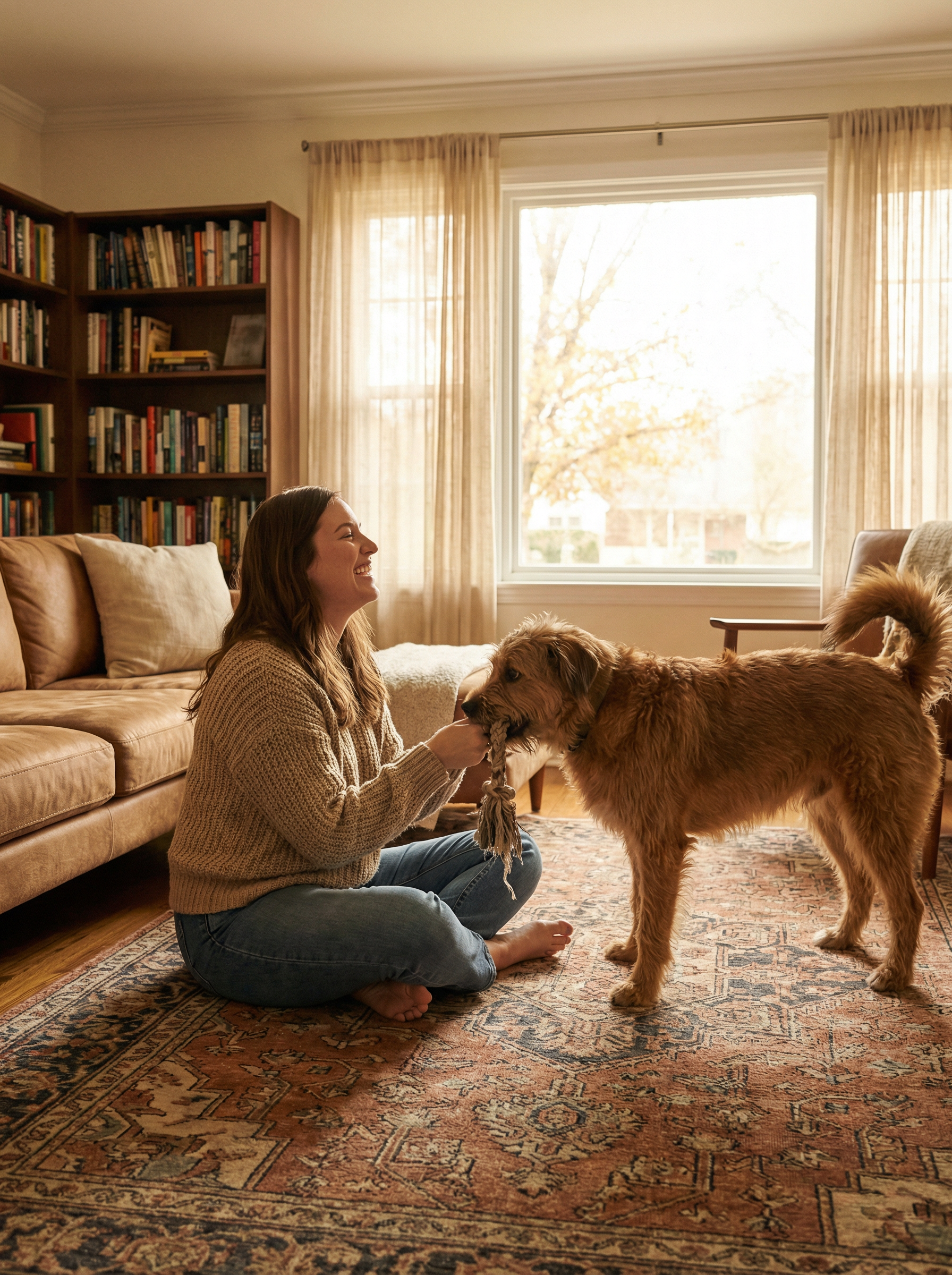
Liquid meds, drawn and dosed during a midday visit
04How We Track Every Dose While You're Gone
Every visit ends with a report card. The dose given, the time it was given, how your pet responded. If a cat hid and we coaxed them out for eye drops, that goes in the notes. If a dog took half the pill but spit the other half onto the rug, that goes in the notes too.
The next visit on the schedule reads those notes before walking in the door. That is how the routine holds even when our care team rotates through the week, and it is the difference between a sitter who shows up and a system that actually works. The same logic carries over to our cat sitting clients, where missed eye drops or transdermals can quietly stack up over a long trip.
You read the report card from your hotel. We read the previous one before the next visit. The chain stays intact even when you are nine time zones away and your phone is on airplane mode.
05When We Call Your Vet Instead of Waiting for You
Most weeks, the medication routine runs without incident. When it does not, we have rules that do not depend on whether we can reach you first.
When we escalate A dose refused two visits in a row triggers a call to your vet's emergency line, with you notified in parallel. A pet that vomits within an hour of an oral medication gets documented and called in. A normally placid cat going into hiding for a full day is the call too. Insulin response that looks off, including lethargy, shakiness, or disorientation, is not a wait-and-see situation. We call.
This is built into how we train, and it is one of the reasons clients across Ogden and Weber County trust us with pets on serious medication routines. CPR-certified, background-checked W-2 employees handle every visit, and our dog walking and pet sitting routes are scheduled so the medication windows hold even when traffic on I-15 does not.
06People Also Ask
Can a pet sitter give my cat insulin shots?+
Yes. Our care team is trained to draw insulin from a refrigerated vial, confirm units against the printed schedule, and administer subcutaneous injections at the same site rotation pattern your vet recommends. We document each dose, the response, and the time on the visit report card.
What if my pet refuses a dose while I'm gone?+
One refusal gets a second attempt with the food or pill pocket you left behind. Two refused doses in a row triggers a call to your vet's emergency line and a parallel notification to you, so the right decision gets made without waiting for time-zone math.
Do you administer eye drops or transdermal medications to cats that hide?+
Yes, and the visit length is built to accommodate it. We coax, we wait, and we document. If a cat hides through the visit window, we extend or split the dose attempt and note exactly what happened so the next visit picks up where the last one left off.
What if my pet has a bad reaction during my trip?+
We call your vet's emergency line first, transport to the clinic if the vet directs us to, and update you in real time. The vet's after-hours number is part of the medication station setup at the meet-and-greet, so there is never a question about which clinic to call.
How much advance notice do you need for a medication schedule?+
For routine medications already on file, no advance notice beyond your normal booking window. For new prescriptions, especially insulin or anything requiring specific handling, we ask for the printed instructions at least 48 hours before your trip so the meet-and-greet has time to walk through the technique.
07Trusting Away Home & Pet Care With Medication Care
The reason medications work during travel is not that the sitter is heroic. It is that the routine was set up to leave no room for guessing.
If your pet's medication schedule has you stressed about leaving town, the meet-and-greet is where Away Home & Pet Care walks through every detail of the regimen and confirms we are the right fit.
✦✦✦
About Away Home & Pet Care
Professional in-home pet care in Ogden, UT
SINCE2007
Licensed, bonded, and insured, with a small team of W-2 employees Robert trained personally. A consistent care team, photo updates after every visit, and service across Ogden, North Ogden, South Ogden, and Riverdale.