If you live along the Wasatch Front, you already know our air has a personality. Most of the year it is some of the cleanest, mountain-fresh air in the country. And then, a couple of times a year, the valley decides to hold its breath. Wildfire smoke rolls in over the summer. A winter inversion parks a gray lid over Ogden for a week. You feel it in your throat, and your pets feel it too, usually before you do.
Here is the thing most pet parents miss: your dog and cat are breathing the same bad air you are, only more of it, and closer to the source. So let's talk about what poor air quality actually does to pets, how to read an Ogden air day, and how to keep your dog moving without putting their lungs through a wringer.
02Why Bad Air Hits Pets Harder
Pets are not just small humans with better coats. A few things stack the deck against them when the air goes bad:
- They breathe faster. A resting dog cycles a lot more breaths per minute than you do, and a walking dog pants, pulling even more air (and fine particulate) deep into the lungs.
- They live at ground level. Smoke particles and exhaust settle low, right at nose height for your dog and definitely for your cat.
- They cannot tell you. No one is going to say "my chest feels tight today." They just slow down, and we have to notice.
Some pets are in the higher-risk group and deserve extra caution: flat-faced ("brachycephalic") breeds like Pugs, Bulldogs, Boxers, and Persians; senior pets; puppies and kittens; and any animal with a heart condition, asthma, or a history of respiratory trouble. If that describes your pet, treat a moderate air day the way the rest of us treat a bad one.
03Ogden's Two Air-Quality Seasons
Most places get one air-quality headache. Lucky us, we get two.
Summer Wildfire Smoke
From roughly July into early fall, smoke from regional wildfires can drift into Weber County and sit. The sky goes hazy, the mountains blur out, and the fine particulate (PM2.5) climbs. Smoke days often pair with summer heat and ozone, which is a rough combo for a dog who just wants their walk. When the foothills above Ogden look like someone smudged them with a thumb, that is your cue to check the numbers.
Winter Inversions
In the cold months, our valley does something sneaky. A layer of warm air traps cold, polluted air down on the valley floor, the Wasatch Front's famous inversion. Pollution has nowhere to go, so it builds, sometimes for days. The mountains look clean up top while the valley sits under a gray ceiling. Those are the days the air down where your dog walks is worse than it looks from your living room window.
04Check the Air Before You Head Out
You do not need to be a meteorologist. You need one number: the AQI (Air Quality Index). The free AirNow app or the Utah Division of Air Quality site will give you the current reading for the Ogden area in about five seconds.
A simple way to think about it, treating your pet like a sensitive group:
- Green (0–50): Go enjoy it. This is why we live here.
- Yellow (51–100): Fine for most pets. Keep an eye on seniors and flat-faced breeds.
- Orange (101–150): Shorten things up. Skip the long hike, keep walks easy, and watch your at-risk pets closely.
- Red (151+): Quick potty breaks only, then back inside. No hard exercise for any pet.
And the low-tech version when you are already standing on the porch: if the air smells like smoke or hazes out the mountains, your dog's walk just got shorter. Trust your nose.
05Signs the Air Is Bothering Your Pet
Pets are stoic, so the signals are easy to wave off. On smoky or inversion-heavy days, watch for:
- Coughing, gagging, or wheezing
- Faster or more labored breathing than normal
- Watery, red, or squinty eyes
- Unusual fatigue, or just refusing to keep walking
- Reduced appetite or a generally "off" mood
Mild stuff usually settles once they are back in cleaner indoor air. But if your pet has serious trouble breathing, won't stop coughing, or has blue-tinged gums, that is an emergency, call your vet or the Animal Emergency Center of Utah right away. Pets with existing heart or lung conditions deserve a much lower threshold for picking up the phone.
Not sure your dog's getting safe exercise on the bad days when you're stuck at work? See how our Ogden dog walking service flexes with the weather, or check the schedule page to find a fit.
06Smarter Routines on Bad-Air Days
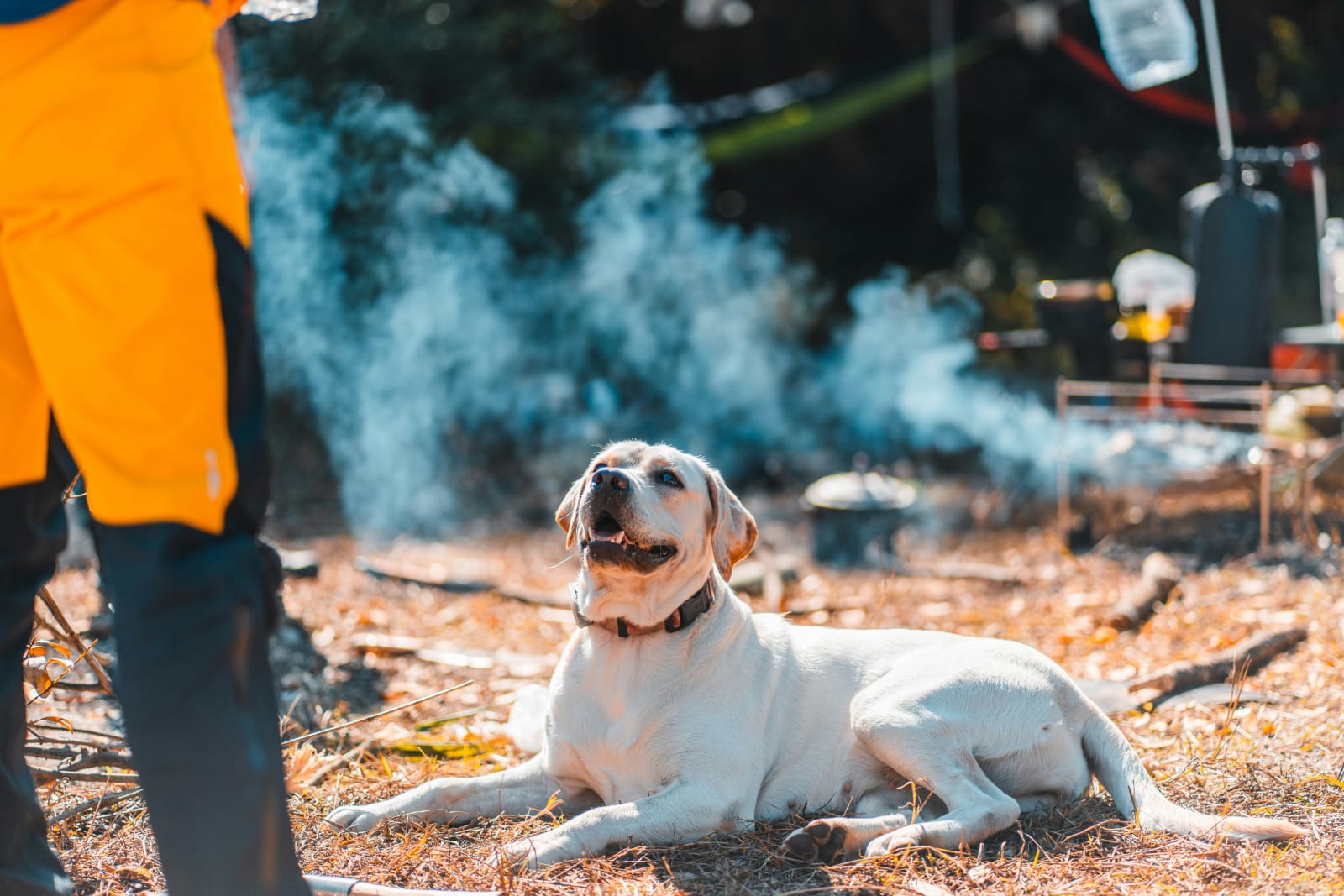
A bad-air day is not a lost cause. It is just a day to swap the game plan. Dogs still need to move, they just don't need to run a 5K through a campfire to do it.
- Keep it short and easy. A brisk potty loop beats a long, panting workout when the AQI is up. Less air pulled in, less particulate down deep.
- Move the mental energy indoors. Puzzle feeders, snuffle mats, a little training, or a good game of "find it" tire a dog out without a single deep breath of smoke.
- Time it for the cleaner stretch. Smoke and inversions ebb and flow through the day. Aiming for a cleaner window beats a rigid clock, your dog cares more about a good walk than an exact start time.
- Keep water flowing. Hydration helps, especially when smoke pairs with summer heat. Fresh bowl, every time.
- Tighten up your indoor air. Windows closed on the worst days, a decent air filter running, and you have given your cat (and your house-bound senior dog) a real break.
07How Our Team Adjusts Care When the Air Turns
This is exactly the kind of judgment call a professional should be making for you, not something you should be stressing about from your desk. When the air goes sideways in Ogden, here is how Away Home & Pet Care handles it.
Our care team scales every walk to the conditions. On an orange or red day, that means shorter, lower-key outings, a calmer route, and more attention on the dogs who can't afford a smoky workout. We would rather give your dog a good sniff-walk and a fresh water bowl than push a hard mile they don't need.
Our walkers are W-2 employees, background-checked, and Pet CPR and First Aid certified, and they go through a structured training program that includes reading a dog's body language and knowing when something is off. A dog who is coughing or lagging on a smoky day gets noticed, not pushed.
And you stay in the loop. After every visit you get a report through Time to Pet with photos and notes, including how your dog handled the air that day. No wondering whether they got out or how they did, it's on your phone before we leave the driveway.
It is the same consistent care team your dog already knows, in North Ogden, South Ogden, Harrisville, Farr West, Roy, and across Weber County, adjusting on the fly so your dog stays safe whether the sky is clear or smudged.